
Table of Contents⌄
Ready for your Himalayan escape?
Book your stay at The Himalayan Chester directly on WhatsApp.
There is a version of Manali that most travelers never see. Mist curling around deodar spires. Rain drumming on a slate roof. A fire crackling in a hearth that has warmed guests for over a century. This is monsoon in Manali, and at The Himalayan Chester, it might just be the valley's best kept secret.
While most travelers save their Manali trip for summer or winter, the monsoon months quietly reward those who show up anyway, provided they choose the right base to stay in. This guide will walk you through why monsoon in Manali deserves a second look, how to visit safely, and why a heritage castle in Simsa is the smartest place to experience it.
Why Monsoon in Manali Is Worth Rethinking
From July to mid September, the Kullu Valley turns a shade of green that simply does not exist the rest of the year. Waterfalls swell, the orchards fill out, and the usual crowds thin to almost nothing. Rooms that are booked months in advance in May become available at a moment's notice. For travelers who want the Himalayas without the queues, this is the season.
The catch is that most travel blogs stop there. They tell you the hills turn green and the hotels get cheaper, then move straight to a warning about landslides, as if the only two options are "risk it" or "stay home." There is a third option: pick a property whose location and design were never built around the parts of Manali that make monsoon risky in the first place.
Is Manali Safe to Visit in Monsoon?
Yes, provided you understand what actually causes the risk, and choose your base accordingly.
The NH-21 Problem
Nearly every safety warning about monsoon travel to Manali points to the same culprit: the stretch of highway connecting Chandigarh to Manali, along with the narrow roads branching toward Kasol, Sissu, and the Atal Tunnel. Heavy rain destabilizes this terrain, and landslides or traffic jams here are the real source of the "is Manali safe in monsoon" anxiety, not the town of Manali itself.
Why Simsa Changes Everything
The Himalayan Chester sits in Simsa, set back from the congested, landslide-prone routes that most monsoon warnings are actually about. The Castle and Cottages are tucked among apple and cherry orchards, with the crowded, traffic-heavy parts of town at a comfortable distance rather than right outside the door. You get the scenery the monsoon is known for (mist over the peaks, waterfalls in full flow) without needing to gamble on the roads that make headlines every July.
In practice, this means your monsoon trip does not have to be a choice between "see the rain soaked Himalayas" and "stay safe." Choosing where you stay solves most of the problem before it starts.
A Heritage Castle Built for Rainy Days
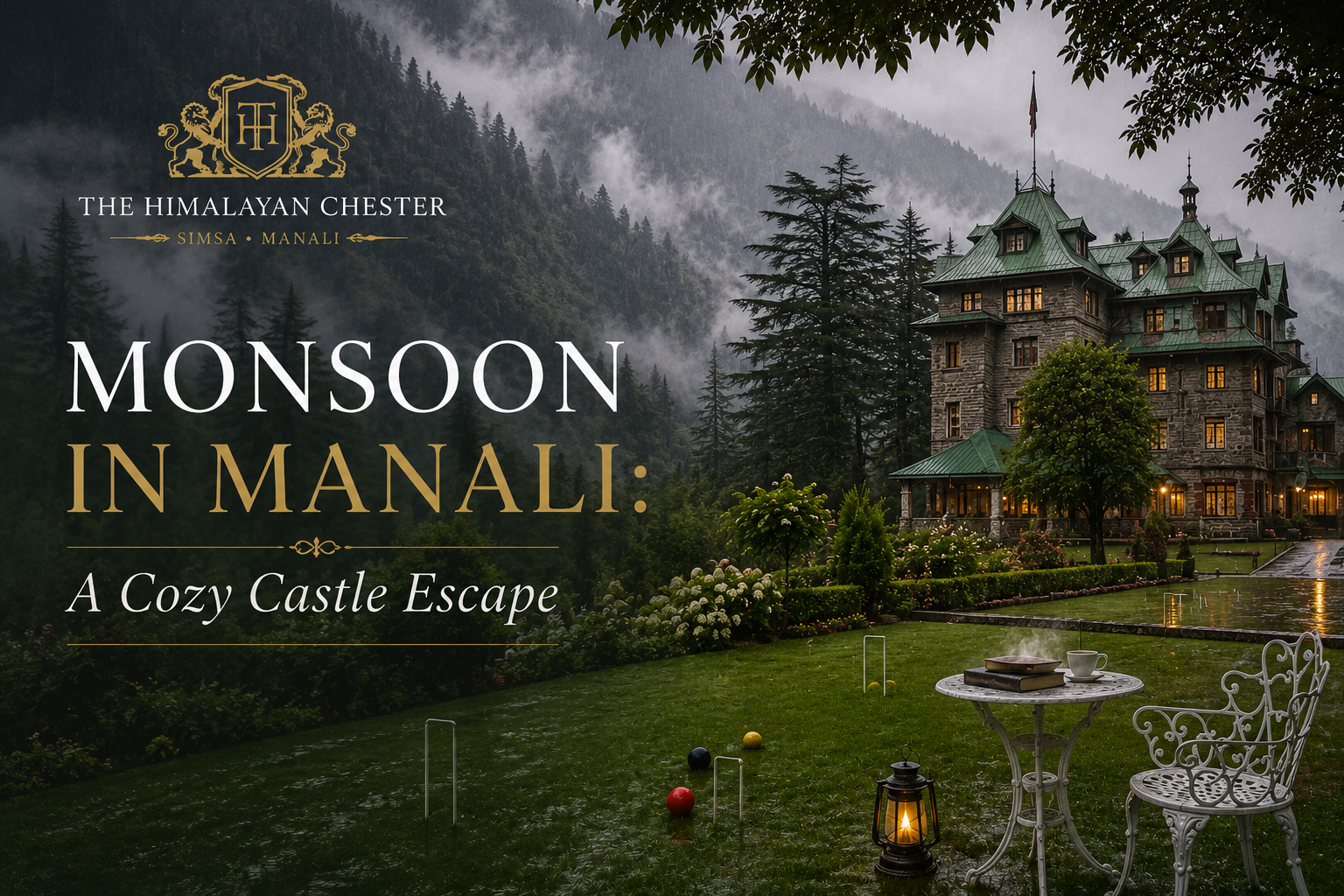
Most monsoon guides treat rainy days as something to survive: an umbrella, a raincoat, a list of museums to duck into. At a Victorian Gothic Revival castle built into the mountainside, a rainy afternoon is not an inconvenience, it is the whole point of staying here.
Fireplace Evenings in the Castle Chambers
Each of the eight guest chambers in the Castle comes with a functional fireplace, a detail that matters more in monsoon than in any other season. There is a particular kind of quiet that settles in when rain is falling outside a four poster bed and a fire is going a few feet away. It is not an amenity you notice on a sunny day in May. In July, it is the reason to come.
Croquet on a Rain Fresh Lawn
Between showers, the lawns at The Himalayan Chester take on a saturated, almost impossible green, and a round of croquet on grass that has just been rained on is a small, specific pleasure that a hotel in the middle of town simply cannot offer. Add a trampoline for the kids, and a rainy day at the property stops feeling like time to fill and starts feeling like part of the holiday.
Dining at The Refectory
When the weather turns, not having to drive into town for a meal is not a small convenience, it is one less trip on roads you would rather avoid. The Refectory serves cooked to order breakfasts and Indian cuisine on site, so a full day of rain never has to mean a compromised day of food. Guests can also unwind with the property's spa services, letting the weather do exactly what it wants outside while the day continues comfortably within.
Ready for your Himalayan escape?
Book your stay at The Himalayan Chester directly on WhatsApp.
Things to Do in Manali During the Rainy Season
When the skies do clear, and they clear often enough, the payoff is considerable. A short trip to nearby experiences curated for guests can include:
- Jogini Falls, an easy two to three hour hike to a waterfall that runs at its fullest in monsoon
- Hadimba Temple, its cedar surroundings washed clean and noticeably quieter than in peak season
- Old Manali's cafe lanes, best enjoyed with a hot chai in hand while the rain passes
- Rafting on the Beas, where monsoon water levels make for a livelier ride than the calmer summer flow
None of these require venturing near the routes that monsoon warnings actually refer to, which is precisely the point of basing yourself somewhere like Simsa in the first place.
Best Time to Visit Manali in Monsoon
Monsoon in Manali generally runs from the second week of July through mid September, with daytime temperatures between 15 and 25 degrees Celsius. Early July and early September tend to see lighter, more intermittent rain, while late July through August brings the heaviest showers. Travelers who want the lush scenery with fewer downpour days often find the bookend weeks the sweet spot. For up to date rainfall patterns before you plan your dates, the India Meteorological Department publishes regional monsoon forecasts worth checking a week or two out.
A Monsoon Stay Worth Booking
Monsoon in Manali is not a season to avoid, it is a season to plan for properly. Choosing a heritage property in Simsa means the scenery, the quiet, and the comfort of the season without the parts that make other travelers nervous. Fewer crowds, greener views, fireplace evenings, and rates that are noticeably kinder than peak season all come together in these few months.
If you have been waiting for the right time to experience The Himalayan Chester, this is it. Check current monsoon season rates or reach out to our team to plan a stay built around fireplace evenings, orchard walks between showers, and a location that keeps the trip stress free from arrival to departure.
Frequently Asked Questions
Is Manali safe to visit during monsoon?
Manali itself is generally safe during monsoon, provided your base is set away from landslide prone stretches like the NH-21 corridor and the narrower routes toward Kasol and Sissu. Properties located in quieter pockets, such as Simsa, avoid most of the risk that these warnings are actually about.
What is the best time to visit Manali in the monsoon season?
The monsoon runs from early July to mid September. Early July and early September typically bring lighter rain and clearer stretches, while late July and August see the heaviest showers.
What should I pack for Manali in monsoon?
A waterproof jacket, a compact umbrella, and closed, water resistant footwear cover most needs. Layered clothing helps too, since evenings can turn cool even when the days are humid.
Are there things to do in Manali if it rains all day?
Yes. At The Himalayan Chester, guests can spend a rained in day by the fireplace, enjoy a meal at The Refectory, use the on site spa, or play a round of croquet as soon as the showers pause, all without needing to travel into town.
Does The Himalayan Chester offer monsoon season rates?
Yes, monsoon typically brings more accessible rates than peak summer or winter season. Visit our offers page for current monsoon pricing.